In the Markets Now: Betting Boom
The world is experiencing a boom, and for once it isn’t AI. No, this one is about gambling. Whether it’s sports betting, prediction markets, or zero-day options and crypto, taking big, short-term bets has never been easier, cheaper, or more visible. Reasonable people can disagree on whether this trend is good or bad. My concern is that investors are using gambling-like tools to pursue goals better served by long-term investing and potentially eroding wealth in the process.
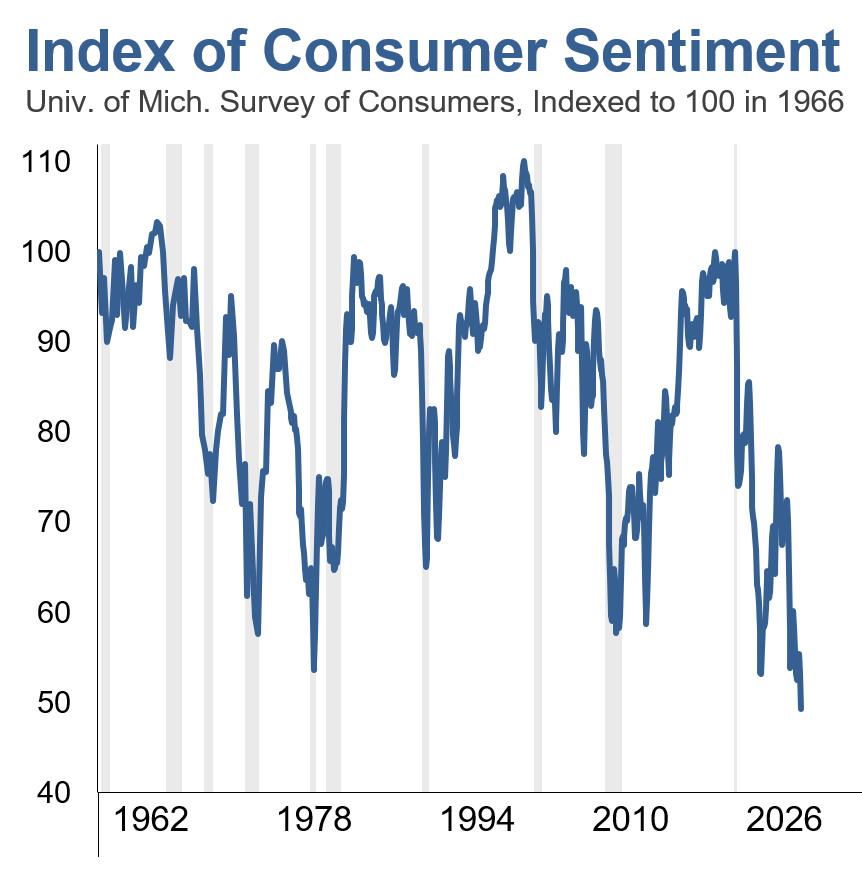
Availability and the economy are both fueling the rise in betting. What once required a pilgrimage to Las Vegas is now as simple as opening your phone. Decades of app development and social media usage have taught modern financial and betting platforms how to use game-like features such as notifications and rewards to encourage frequent engagement, while the survivorship bias inherent to social media makes winning seem more frequent than it actually is. Meanwhile, in a post-pandemic world colored by record-low consumer sentiment, labor market uncertainty, and high inflation, building wealth through long-term investment may seem like an outdated concept to many. This can foster a mindset where taking larger risks and spending hard-earned money on low probability/high upside bets (out-of-the money options, multi-leg parlays) might feel like a more realistic path to wealth.
Prediction markets have blurred the line between gambling and investing. Prediction markets combine financial infrastructure and terminology with a gambling-like payoff structure. Because both involve risking money for the hope of future gains, it’s easy to see how the line can get blurred. And it’s not as simple as good vs. bad. Prediction markets aggregate useful information, options can help manage risk, and for many, betting is simply great entertainment (and I’ll be the first to say that there’s immense value in having fun). But it’s worth pinning down what separates investing from gambling to understand where each belongs in an investor’s financial picture.
Expected value is the core difference. What could you expect to win or lose on average if you made the same decision over and over again? That’s expected value. Investing tends to have a positive expected value because it represents ownership of assets that (ideally) generate profits and value as the global economy grows. Though short-term results vary widely (and past returns don’t guarantee future results), most major investable asset classes have delivered positive returns over longer spans of time. Gambling, on the other hand, almost always has a negative expected return. There’s a reason they say Las Vegas wasn’t built on winners: casino games and betting markets are designed with a built-in advantage for the operator (the “house edge”). As Frank Sinatra put it: “Las Vegas is the only place I know where money really talks…it says goodbye.” In gambling and prediction markets, the odds are stacked against you.
Time intensifies outcomes, for better or worse. With investing, compounding magnifies expected value over time via reinvested gains as each positive outcome raises the base on which future gains are earned. Returns build on prior returns over time. But that process can go both ways. In negative expected value activities like gambling, losses build on losses so that bigger and bigger bets are needed to try to get out of a hole. Gambling and prediction markets also have deadlines – a football game’s final buzzer or an election result. Those shorter time horizons force more transactions and higher accumulated costs in fees and taxes. Gambling can be enjoyed responsibly but you owe it to yourself to understand the odds. (Han Solo had it wrong…always tell me the odds.) And with time, the stakes get higher: investing compounds your advantage, gambling compounds the house’s.
Disclosures
This is not a complete analysis of every material fact regarding any company, industry or security. The opinions expressed here reflect our judgment at this date and are subject to change. The information has been obtained from sources we consider to be reliable, but we cannot guarantee the accuracy. Market and economic statistics, unless otherwise cited, are from data provider FactSet.
This report does not provide recipients with information or advice that is sufficient on which to base an investment decision. This report does not take into account the specific investment objectives, financial situation, or need of any particular client and may not be suitable for all types of investors. Recipients should not consider the contents of this report as a single factor in making an investment decision. Additional fundamental and other analyses would be required to make an investment decision about any individual security identified in this report.
For investment advice specific to your situation, or for additional information, please contact your Baird Financial Advisor and/or your tax or legal advisor.
Past performance is not indicative of future results and diversification does not ensure a profit or protect against loss. All investments carry some level of risk, including loss of principal. An investment cannot be made directly in an index.
Copyright 2026 Robert W. Baird & Co. Incorporated.
Other Disclosures
UK disclosure requirements for the purpose of distributing this research into the UK and other countries for which Robert W. Baird Limited holds an ISD passport.
This report is for distribution into the United Kingdom only to persons who fall within Article 19 or Article 49(2) of the Financial Services and Markets Act 2000 (financial promotion) order 2001 being persons who are investment professionals and may not be distributed to private clients. Issued in the United Kingdom by Robert W. Baird Limited, which has an office at Finsbury Circus House, 15 Finsbury Circus, London EC2M 7EB, and is a company authorized and regulated by the Financial Conduct Authority. For the purposes of the Financial Conduct Authority requirements, this investment research report is classified as objective.
Robert W. Baird Limited ("RWBL") is exempt from the requirement to hold an Australian financial services license. RWBL is regulated by the Financial Conduct Authority ("FCA") under UK laws and those laws may differ from Australian laws. This document has been prepared in accordance with FCA requirements and not Australian laws.